

Check your undertone in daylight using vein, jewelry, and white paper tests.
If you want to learn how to know your skin tone with confidence, you are in the right place. I have guided clients, photographers, and brides through color decisions that hinge on undertone.
In this guide, I will show simple steps, pro tricks, and clear signs so you can read your skin like a color expert and apply the results in real life.
Skin tone vs undertone: the foundation of accurate color
Skin tone is the depth of your skin color on the surface. It ranges from very fair to very deep and can tan or fade with seasons. Undertone is the subtle hue under the surface. It stays stable and sits in one of four groups: warm, cool, neutral, or olive.
- Warm undertone has a golden, peach, or yellow cast.
- Cool undertone leans pink, red, or blue.
- Neutral undertone looks balanced, neither clearly warm nor cool.
- Olive undertone shows a soft green or gray cast with muted warmth.
Dermatology research links tone to melanin levels and sun response, while undertone relates to how your skin reflects light and color. The well known Fitzpatrick scale describes sun reaction and tone depth, but it does not define undertone. Knowing how to know your skin tone means you separate tone depth from undertone and test for both.
Why knowing your undertone matters for daily choices
Undertone guides makeup, hair, clothes, and even lighting that flatters you. The right match adds life to your face. The wrong one can look dull, ashy, or orange.
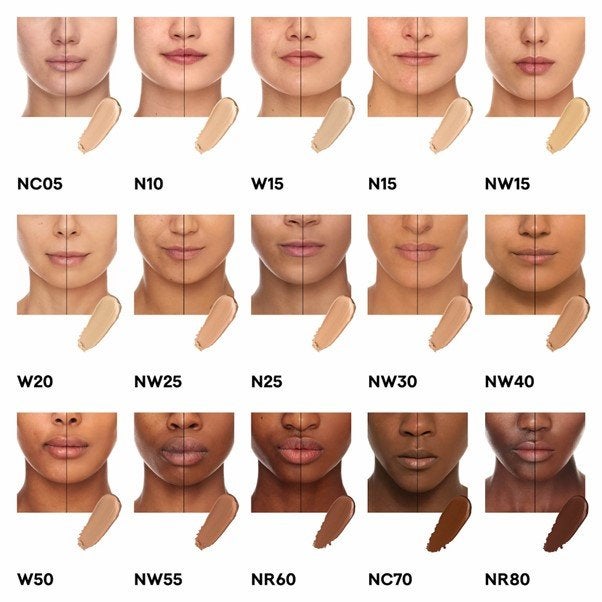
- Foundation undertone affects whether your base turns gray or yellow on your skin.
- Lipstick, blush, and bronzer either harmonize or fight your natural color.
- Hair dye can light up your eyes or add unwanted red or green casts.
- Clothing and jewelry metals frame your face and can reduce shadows.
- Even sunscreen filters and flash photos can shift how your skin reads.
Clients often ask me how to know your skin tone after a makeup mishap. Most issues come from ignoring undertone. Once you lock it in, choices get easy.

Prepare for testing: set your light and tools
Good light and a clean face make all the difference. You want daylight and a calm skin state.
- Test near a window with bright, indirect daylight. Avoid yellow lamps and blue screens.
- Remove makeup and tinted skincare. Wait 10 to 15 minutes for your skin to settle.
- Skip tests if you are sunburned, flushed from a workout, or using self-tanner.
- Gather a white sheet of paper, a gold and a silver item, a neutral gray tee, and a phone camera.
These steps help you get a true read when you try how to know your skin tone at home.

At-home tests: simple ways to identify your undertone
Use more than one method. When two or three tests agree, you can trust the result. Here is how to know your skin tone with quick checks.
Vein test
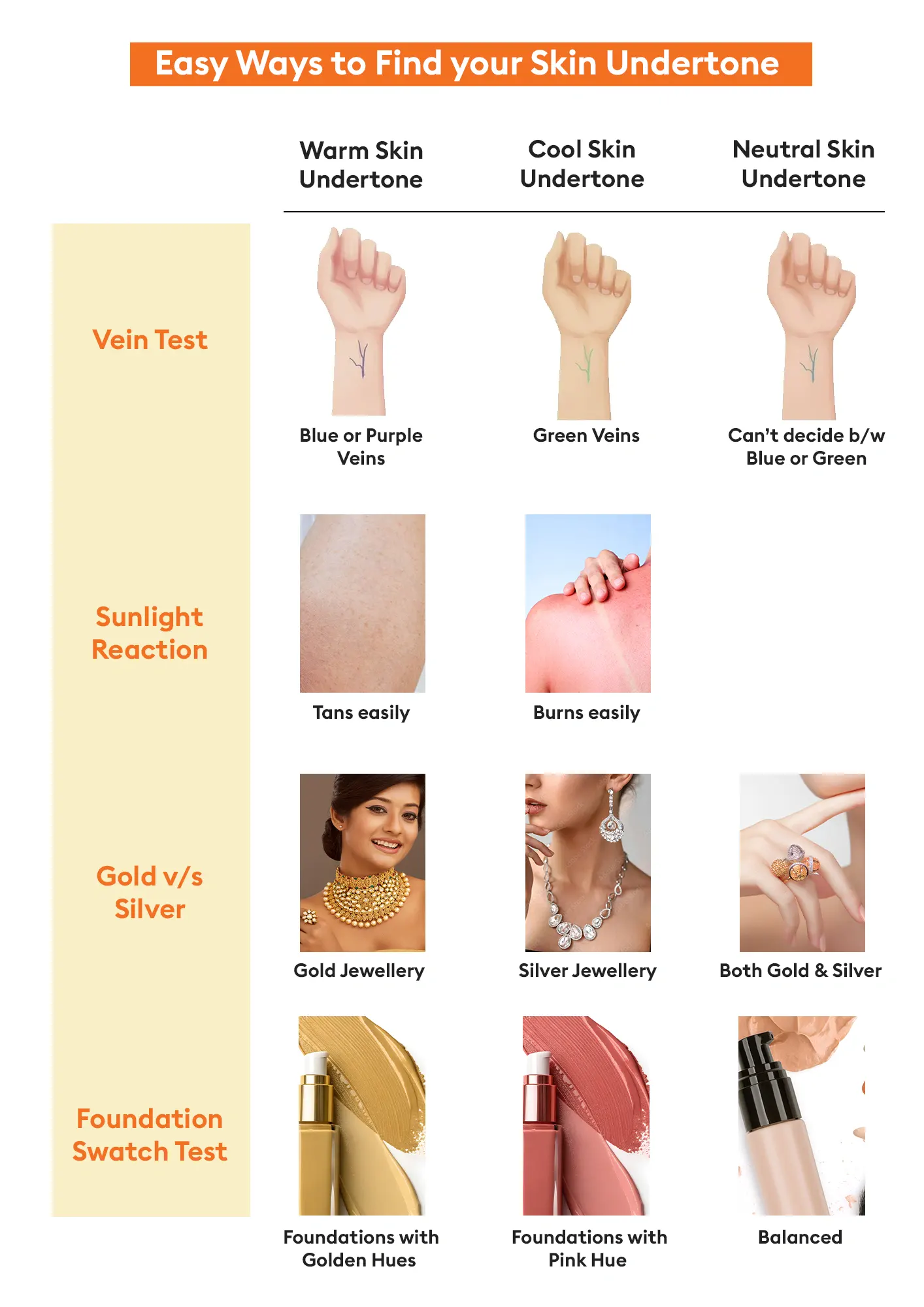
Look at the veins on the inside of your wrist or elbow in daylight.
- Greenish veins suggest warm.
- Blue or purple veins suggest cool.
- A mix or unclear color suggests neutral or olive.
White paper test
Hold a clean sheet of white paper beside your bare face.
- If your skin looks golden or peach next to white, you are likely warm.
- If it looks rosy or bluish, you are likely cool.
- If it looks grayish or slightly green, you may be olive.
- If it stays balanced, you are likely neutral.
Jewelry test
Try on plain gold and silver near your face.
- Gold flatters warm tones.
- Silver flatters cool tones.
- Both look fine on neutral.
- Olive can prefer muted or antique metals rather than bright yellow gold.
Color drape test
Drape a cool blue and a warm orange or coral near your face.
- If blue makes your eyes bright and skin even, you lean cool.
- If orange or coral adds glow and reduces shadows, you lean warm.
- If both look fine, you may be neutral.
- If both seem a bit off but muted teal or soft moss looks best, you may be olive.
Foundation stripe test
Apply two to three stripes of foundation on your jaw. Use one warm, one cool, and one neutral.
- The right undertone vanishes into your skin in daylight.
- If every shade looks off, try an olive or golden-olive option.
Sun response check
Think about how your skin behaves in sun.
- Tan fast with little burn often aligns with warm or olive.
- Burn then tan often aligns with cool.
- Both or neither can signal neutral.
Stack your answers. If most tests point warm, you have a warm undertone. This is the most reliable way to apply how to know your skin tone in real life.

Advanced and professional methods
If you want higher accuracy, add tools and pro checks.
- Personal color analysis uses fabric drapes under controlled light. It reads undertone and best color season.
- A colorimeter or spectrophotometer measures skin reflectance. It can map undertone and depth with numbers.
- A smartphone with RAW capture and a gray card can help. Take a daylight photo, white balance to the gray card, then compare how your skin reads against known colors.
- The Fitzpatrick questionnaire helps estimate sun response and tone depth. Pair it with undertone tests for a full picture.
For clients who ask how to know your skin tone with tech, I suggest a gray card photo and a daylight drape. The match rate is high when both agree.

Nuances and special cases you should consider
Not every face fits a neat label. Here are cases I often see.
- Olive undertone can look sallow in yellow light and pink in warm makeup. Muted, cool-leaning colors often work best.
- Deep skin can be cool, warm, or neutral. Cool deep skin may need blue based reds and neutral bronzers to avoid red overload.
- Redness from rosacea or acne does not mean cool undertone. Test on the neck or chest if your cheeks are inflamed.
- Hyperpigmentation can shift the read. Use the side of the face or under the jaw to test undertone.
- Tanning changes tone depth, not undertone. Recheck shade depth in summer, but keep the same undertone family.
Lighting changes everything. Warm indoor bulbs add yellow. Phone screens add blue. If results clash, retest in clear daylight. This is key when you want a reliable answer to how to know your skin tone.

Apply your results: makeup, hair, wardrobe, and jewelry
Once you confirm undertone, use it to guide choices. Here is a simple map.
Foundation, concealer, and face color
- Warm undertone: choose W, Y, or G codes, golden or peach bases. Peachy blush and warm bronzer add life.
- Cool undertone: choose C, R, or P codes, rosy or neutral bases. Blue based red lips and cool pink blush pop.
- Neutral undertone: choose N or balanced formulas. Most shades work if depth is correct.
- Olive undertone: look for olive or golden olive lines. Muted peach, terracotta, or neutral rose works well.
Hair color
- Warm undertone: golden brown, caramel, copper, honey blonde.
- Cool undertone: ash brown, cool black, platinum, burgundy.
- Neutral undertone: soft beige blondes and browns.
- Olive undertone: mushroom brown, neutral black, or espresso with subtle warmth.
Clothes and metals
- Warm undertone: cream, camel, coral, tomato red, olive green. Gold, bronze, and rose gold shine.
- Cool undertone: true white, navy, cobalt, fuchsia, charcoal. Silver, platinum, and white gold flatter.
- Neutral undertone: soft white, taupe, teal, dusty rose. Both metals work.
- Olive undertone: sage, teal, soft mustard, muted berry. Brushed metals or antique finishes often look best.
As a bridal artist, I learned the hard way that a cool base on a warm olive bride turns gray in flash photos. After we switched to an olive base and muted coral blush, her skin looked clear and bright. That is the power of knowing how to know your skin tone.
Common mistakes and how to fix them
Avoid these pitfalls so your results stay accurate.
- Testing under warm lamps or mixed light. Use daylight near a window.
- Reading redness as cool. Test on the neck or chest if cheeks are flushed.
- Using only one test. Combine two or three methods for a clear answer.
- Ignoring seasonal depth shifts. Keep undertone the same but adjust your shade depth as you tan or fade.
- Trusting filters or auto white balance. Turn off filters and retest with a gray card.
When your tests disagree, repeat them on a different day and in better light. This methodical approach is the safest path for how to know your skin tone without guesswork.

Frequently Asked Questions of how to know your skin tone
What is the difference between skin tone and undertone?
Skin tone is the depth of your skin on the surface. Undertone is the hue under the surface that stays stable all year.
Can my undertone change over time?
Undertone is very stable and rarely changes. Tone depth can shift with sun, age, or skincare, but undertone usually stays the same.
How do I tell if I am olive undertone?
Olive often looks a bit green or gray next to bright white and prefers muted colors. Teal, sage, and moss tend to flatter more than pure warm or pure cool shades.
Which foundation codes match each undertone?
W, Y, or G suits warm. C, R, or P suits cool. N suits neutral, and some brands label olive or golden olive for olive undertones.
Are online quizzes accurate for undertone?
They can help, but light and screen color can mislead. Use quizzes with daylight tests and compare several methods for best results.
What if gold and silver both look good on me?
You may be neutral or olive. Try the white paper and color drape tests to break the tie.
Does self-tanner affect undertone tests?
Self-tanner adds surface warmth and can confuse results. Test when your skin is free of tanner for a true read.
Conclusion
You now have a complete, step by step plan to read your undertone with clarity. Use daylight, stack two or three tests, and apply the results to your base, hair, and wardrobe. When you learn how to know your skin tone and undertone, your choices become simple and your look stays consistent across lights and seasons.
Put this guide to work today. Test in daylight, note your results, and make one small change, like switching to a better matched base. Want more helpful breakdowns like how to know your skin tone for photos, events, or work? Subscribe or leave a comment with your questions so I can help you dial in your best colors.